
Maximizing Image Quality: Best Settings for Your Canon Underwater Housing
2024-12-16 13:20
Maximizing Image Quality: Best Settings for Your Canon Underwater Housing
Table of Contents
- Introduction to Underwater Photography
- Understanding Canon Underwater Housing
- Key Camera Settings for Underwater Photography
- Adjusting White Balance for Underwater Shots
- Lighting Techniques for Underwater Photography
- Focusing Tips for Clear Underwater Images
- Post-Processing Your Underwater Images
- Frequently Asked Questions
- Conclusion
Introduction to Underwater Photography
Underwater photography offers unparalleled opportunities to capture the beauty of marine life and submerged landscapes. Whether you're exploring coral reefs or capturing the intricate details of underwater flora, having the right settings and techniques is crucial for maximizing image quality. This article provides a detailed guide on optimizing your Canon underwater housing settings for stunning underwater photographs.
Understanding Canon Underwater Housing
Canon underwater housing is designed to protect your camera from water damage while allowing you to take incredible underwater photos. It provides access to essential camera controls and features, ensuring that you can adjust settings even in challenging underwater conditions. Understanding the functionality of your Canon underwater housing is the first step to achieving high-quality images.
Key Camera Settings for Underwater Photography
Getting the right camera settings is vital for underwater photography. Below are the key settings to focus on:
ISO Settings
ISO determines your camera's sensitivity to light. In underwater photography, where light diminishes quickly, a **higher ISO setting** is often necessary. However, increasing the ISO can introduce noise into your images. We recommend starting with an ISO of **400-800** and adjusting based on your light conditions. When shooting in bright conditions, a lower ISO will suffice, while deeper dives may require a higher ISO.
Aperture Settings
The aperture controls the amount of light entering the camera and affects depth of field. A lower f-stop number (like **f/2.8 or f/4**) allows more light in, perfect for low-light situations or when you want to achieve a blurred background. For broader depth of field, especially when photographing close to subjects, consider using a higher f-stop like **f/8** to ensure both foreground and background are in focus.
Shutter Speed Settings
Shutter speed plays a crucial role in freezing motion and avoiding blurriness. For underwater photography, a shutter speed of at least **1/125 sec** is typically recommended. If you're shooting fast-moving subjects, such as fish or divers, you may want to increase this to **1/250 sec** or even higher to capture sharp images without motion blur.
Adjusting White Balance for Underwater Shots
White balance is essential in underwater photography due to water’s color absorption properties. Red and orange hues disappear quickly, affecting the natural colors of your subjects. Setting your camera to **‘Underwater’ mode** or manually adjusting the white balance to compensate for the blue hues can help restore those lost colors. When shooting in natural light, consider using a **custom white balance** based on the light conditions at your specific depth.
Lighting Techniques for Underwater Photography
Proper lighting can significantly enhance your underwater images. Here are some effective lighting techniques:
Using Natural Light
Utilizing sunlight can produce stunning images, especially if you shoot during midday when the sun is directly overhead. Position yourself so that the sunlight hits your subject without casting unwanted shadows.
Incorporating Flash or Strobes
When shooting deeper or in murky waters, consider using an external flash or strobe. This can help illuminate your subject without the color loss commonly associated with water. Position your flash at an angle to minimize backscatter and ensure even lighting across your subject.
Focusing Tips for Clear Underwater Images
Achieving precise focus in underwater photography can be challenging but is essential for high-quality images. Here are several tips to enhance your focus:
Utilize Manual Focus
Autofocus can struggle in murky water or with moving subjects. Switching to manual focus allows you to select your focal point precisely.
Focus on the Eyes
When photographing marine life, always aim to focus on the eyes of your subject. This technique helps engage viewers and creates striking images.
Post-Processing Your Underwater Images
Post-processing is a crucial step in enhancing your underwater photographs. Here are some techniques to consider:
Color Correction
Use software like Adobe Lightroom or Photoshop to correct color casts and bring back the vibrant colors that may have been lost underwater. Adjusting the vibrancy and saturation can help restore the natural beauty of your images.
Sharpening and Noise Reduction
Apply sharpening to enhance details, particularly if you shot at a higher ISO. Use noise reduction tools to minimize grain while maintaining image clarity.
Frequently Asked Questions
1. What is the best ISO setting for underwater photography?
The best ISO setting varies based on lighting conditions, but starting with ISO 400-800 is generally effective.
2. How do I prevent backscatter in underwater photography?
To minimize backscatter, keep your flash at an angle and maintain a proper distance from your subjects.
3. Can I use a polarizing filter underwater?
Yes, polarizing filters can help reduce glare and enhance color saturation in underwater images.
4. What is the ideal shutter speed for capturing fast-moving marine life?
A shutter speed of 1/250 sec or higher is recommended for freezing motion in fast-moving subjects.
5. How do I adjust white balance underwater?
You can adjust white balance manually or set your camera to ‘Underwater’ mode for optimal color correction.
Conclusion
Maximizing image quality with your Canon underwater housing requires an understanding of various settings and techniques. From adjusting ISO and aperture to mastering lighting and post-processing, each element plays a vital role in capturing stunning underwater images. By applying the insights and tips provided in this guide, you'll be well on your way to creating breathtaking underwater photography that showcases the beauty of the ocean's depths. Happy diving and shooting!
MORE NEWS
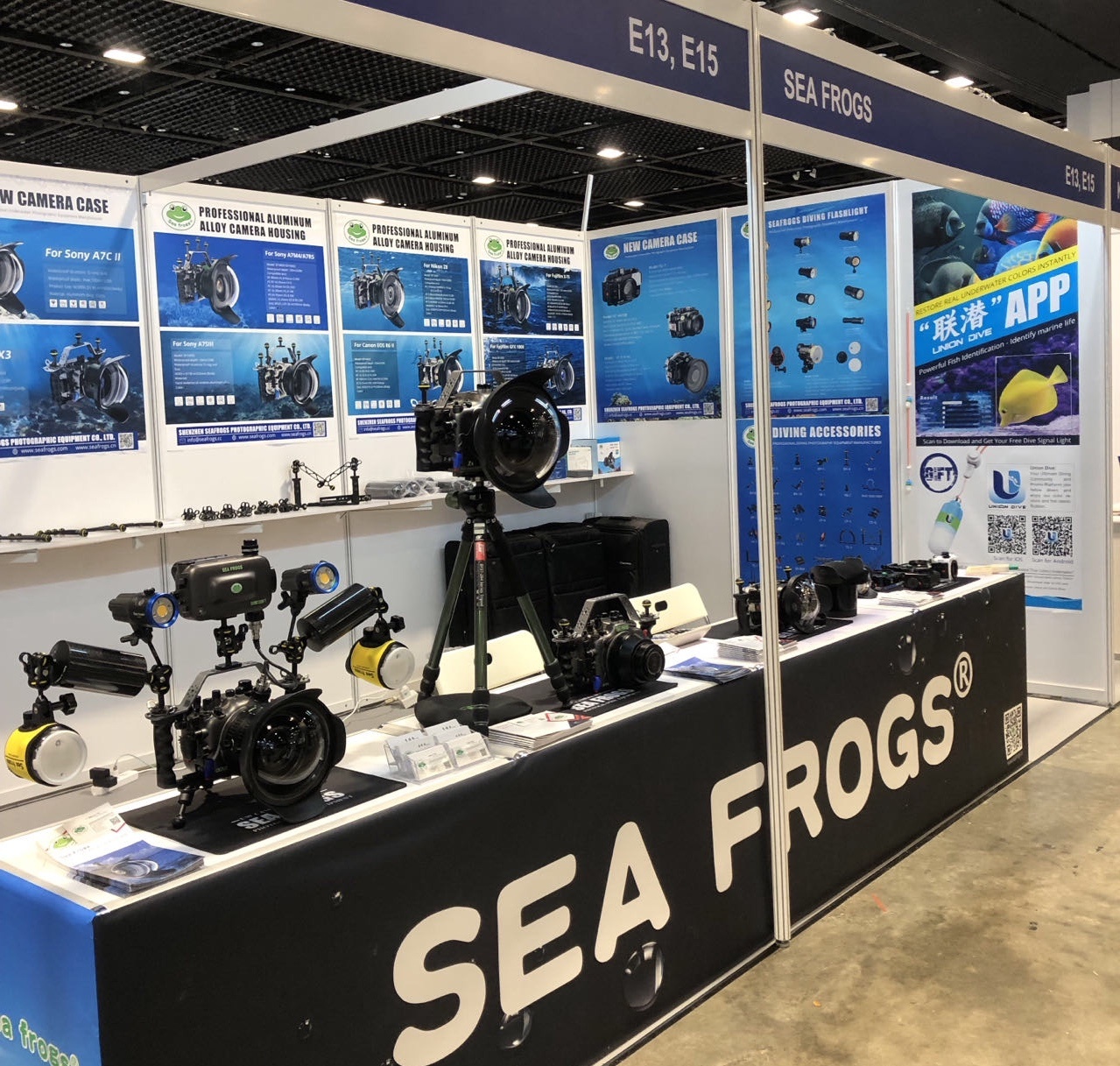
April 12-14th, 2024
Suntec Singapore Convention & Exhibition Centre
2024/04/12

Copyright © 2024 Shenzhen Seafrogs Photographic Equipment Co., Ltd. All rights reserved.
Powered by 300.cn | SEO |